Designing with Feeling: The Practical Magic of Hello Heart
Every creative project has a voice. Sometimes it needs to shout with bold, blocky letters. Other times, it needs to whisper something intimate and personal. When your work calls for that second, more emotional tone—something that feels handwritten, personal, and genuinely affectionate—you need a typeface that doesn't just look pretty but communicates that feeling with clarity. This is where a script font like Hello Heart enters the conversation, offering a specific, valuable tool for designers and creators who need to bridge the gap between digital precision and human warmth.
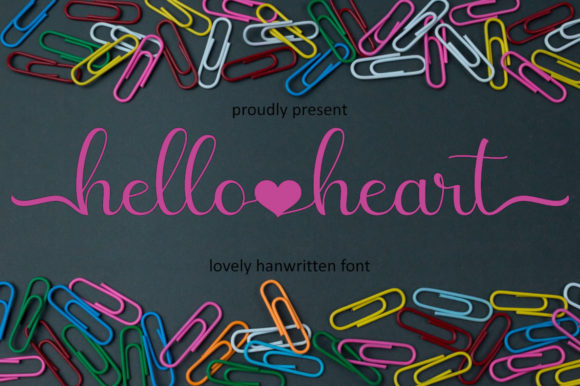
Hello Heart isn't just another decorative font. It’s a carefully crafted, romantic script that balances the organic flow of handwriting with the structural integrity needed for professional use. Its visual personality is defined by flowing, connected letterforms, gentle curves, and a subtle bounce that avoids feeling rigid or overly formal. It carries a modern sensibility, leaning away from heavy, traditional calligraphy and toward a cleaner, more accessible aesthetic. The result is a typeface that feels both beautiful and functional, capable of adding a layer of emotional resonance to a wide variety of contexts without sacrificing legibility.
Where a Font Like Hello Heart Truly Shines
Understanding a font's ideal application is key to using it effectively. The strength of Hello Heart lies in its ability to act as a display font, drawing the eye and setting a specific mood. Its character is best showcased in headlines, logos, and accent text rather than in long paragraphs of body copy. For entrepreneurs and small business owners, it’s a powerful component in building a brand identity that feels approachable and human-centric. Imagine it on the logo for a boutique bakery, a wedding photographer’s website, or a handmade jewelry brand. In these contexts, the font doesn't just spell out a name; it communicates a promise of care, quality, and personal touch.
For marketers and content creators, the applications are equally practical. Hello Heart can transform social media graphics from generic to engaging. Use it for a compelling quote overlay on an Instagram story, a special announcement on a Facebook post, or the title of a lifestyle blog. Its romantic flair is an obvious fit for projects related to weddings, holidays like Valentine’s Day, or heartfelt messaging, but its modern style allows it to adapt to broader themes of wellness, creativity, and gratitude. In editorial design, it can serve as a striking pull quote or a chapter title in a lifestyle magazine or e-book, guiding the reader’s eye and breaking up visual monotony.
Beyond the digital realm, its value extends to physical products. For crafters and designers working in packaging design, Hello Heart can add a premium, artisanal feel to labels, tags, and boxes. It’s equally at home on printed materials like greeting cards, invitations, thank-you notes, and posters. The key is to recognize its role as a specialized tool. You wouldn’t use a sledgehammer to hang a picture frame, and you wouldn’t use a delicate script font for a technical manual. Hello Heart is the elegant, purpose-built tool for when your message needs to feel personal and beautiful.
Pairing, Readability, and the PUA Advantage
Effective design is often about contrast and hierarchy. A script font like Hello Heart rarely works well in isolation. The most professional and readable results come from smart font pairing. The flowing nature of a script demands a stable, clean counterpart to provide balance and ensure overall legibility. The most common and successful pairing strategy is to combine your display font with a neutral sans serif font or a classic serif font. For instance, you could pair Hello Heart with a clean sans serif like Montserrat or Lato for body text. The simplicity of the sans serif allows the script’s personality to stand out without creating visual chaos. Alternatively, pairing it with a timeless serif like Garamond or Playfair Display can create a more elegant, high-fashion feel.
When evaluating any premium font, especially a script, readability at small sizes is a critical consideration. Always test your chosen typeface at the size it will actually be used. While Hello Heart is designed for clarity, its connected letterforms may become difficult to decipher in very small body copy or on low-resolution screens. Its sweet spot is in larger, impactful text where its beautiful details can be fully appreciated. A practical step is to view the font on both a desktop monitor and a mobile device to ensure it renders well across different web design and viewing environments.
One of the most significant practical features of Hello Heart is its PUA (Private Use Areas) encoding. For anyone not deep in the technical side of typography, this is a major benefit. PUA encoding means that all the extra glyphs, stylistic alternates, and swashes included with the font are easily accessible. You don’t need advanced design software or special skills to use them. These additional characters allow you to customize words, create unique ligatures, and add decorative flourishes, giving you greater creative control and the ability to make your designs using Hello Heart even more unique and tailored to your project.
Making a Confident Choice for Your Creative Assets
Choosing a creative font for a project—whether it’s for a client or your own brand—is a strategic decision. Start by clearly defining the emotion and message you want to convey. Does your project need to feel joyful, sophisticated, rustic, or modern? Hello Heart is built for romantic, cute, and beautiful sentiments, so ensure that aligns with your core message. Next, consider the technical requirements. If your project is primarily for print, you have more flexibility with size. For digital, especially mobile-first designs, test for on-screen performance.
As with any design asset, understanding the licensing is non-negotiable for commercial work. Before purchasing or downloading any font, verify that its license covers your intended use. A standard license for a commercial font like Hello Heart typically permits use in logos, websites, and printed materials for a single business or client. If you plan to use it in products for sale (like on a t-shirt or mug), an extended license may be required. Always read the license agreement carefully to avoid legal issues down the line. This due diligence is a mark of a professional and protects both you and your clients.
Ultimately, the best way to know if a typeface is right is to experiment. Most foundries provide specimen sheets or previews that show the full character set. Use these to test your brand name or key headlines. See how the letters connect, explore the swashes, and assess the overall feeling it generates. A font like Hello Heart is more than just a set of characters; it's a design asset that can become a cornerstone of a visual identity, evoke a specific emotion in a marketing campaign, or add a handcrafted touch to a personal project. By approaching it with a clear purpose and practical testing, you can harness its potential to create work that is not only visually appealing but also deeply effective.