Rosemary: The Playful Script Font for Authentic Design
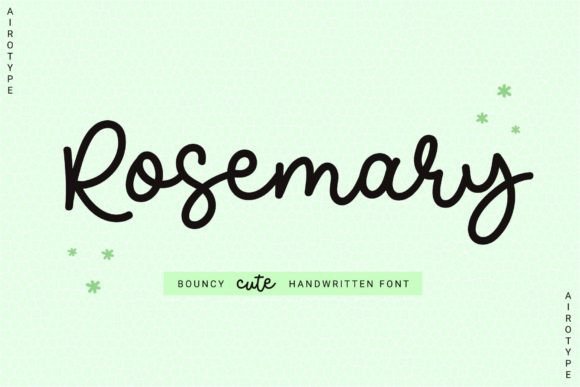
Finding a font that feels both approachable and polished can be a real challenge. You want something with personality, but not so much that it overpowers your message. That's where Rosemary comes in. It’s a bouncy, simple, and cute script font designed to add a warm, handwritten touch without sacrificing clarity. Think of it as the friendly, reliable creative partner that works hard behind the scenes to make your projects shine.
Understanding Rosemary's Charm
At its core, Rosemary is a script font that leans into simplicity. Its letterforms are clean and legible, with a gentle bounce that mimics natural handwriting. This isn't a dramatic, elaborate calligraphy style; it’s more like the neat, slightly playful writing you’d find in a personal journal or a handwritten note from a friend. This simplicity is its greatest strength. It makes Rosemary incredibly versatile, allowing it to adapt to a wide range of contexts without feeling out of place.
The font's personality is approachable and friendly. It conveys warmth, creativity, and a touch of whimsy. This makes it an excellent choice for projects where you want to build a connection with your audience. For instance, in brand identity work, using Rosemary for a bakery, a boutique, or a creative studio can instantly communicate a hands-on, artisanal quality. It feels human and authentic, which is a powerful asset in today's digital landscape.
Where Rosemary Truly Shines
Rosemary's versatility is one of its key selling points. It’s not just a display font for headlines; it’s a workhorse for numerous applications. In the world of packaging design, it can add a homemade, premium feel to product labels, especially for items like jams, candles, or skincare products. The font's clarity ensures that important information remains readable, even at smaller sizes.
For digital projects, Rosemary is a fantastic asset for social media graphics, blog headers, and website accents. It can make quotes, testimonials, or call-to-action buttons stand out with a personal touch. When used in editorial design, such as magazine layouts or book covers, it works beautifully for pull quotes or chapter titles, adding visual interest without disrupting the flow of body text set in a complementary serif or sans serif font.
The applications extend into personal and commercial crafting as well. Its clean lines make it perfect for wedding invitations, where elegance and readability are paramount. Crafters love it for t-shirt design, stickers, and sublimation projects because it cuts cleanly and maintains its charm at various scales. The fact that it’s a PUA encoded font means accessing all its glyphs and swashes is straightforward, giving you more creative control without technical hassle.
Making Rosemary Work for Your Project
Choosing the right typeface is about more than just liking how it looks. It’s about evaluating fit. Start by considering your project's tone. Rosemary excels in contexts that value approachability, creativity, and a personal connection. If your brand is ultra-corporate or minimalist in a stark, industrial way, it might not be the perfect match. But for most other scenarios, it’s worth testing.
A crucial step in modern typography is font pairing. Rosemary, as a script font, pairs best with cleaner, more structured typefaces. Try combining it with a simple sans serif for body text or a classic serif font for a more traditional feel. The key is contrast: let Rosemary be the star for headlines or accents, and use its partner font for longer paragraphs to ensure optimal readability.
Before finalizing, always test the font in context. Mock up your design, whether it’s a logo, a social media post, or product packaging. Check how it looks at different sizes and in different colors. Pay attention to the spacing between letters (kerning) and lines (leading) to ensure the text flows naturally. While Rosemary is designed for clarity, overly long paragraphs in script can still be taxing to read, so use it strategically.
From a practical standpoint, consider the licensing. Rosemary is a premium font, and understanding its license is essential for commercial use. Ensure the license covers your intended applications, whether for print-on-demand, digital products, or client work. This protects you legally and ensures you’re using the design assets correctly.
Elevating Your Design with a Thoughtful Script
In the end, a font like Rosemary is more than just a collection of letters. It’s a tool for storytelling and connection. Its bouncy, simple character can influence how your audience perceives your brand, making it feel more relatable and trustworthy. By using it thoughtfully—considering readability, pairing it wisely, and applying it to the right projects—you can leverage its charm to enhance visual hierarchy, strengthen brand recognition, and ultimately, create more engaging and effective designs.
Whether you’re a designer crafting a logo, a marketer creating social media graphics, or a small business owner designing packaging, Rosemary offers a blend of personality and practicality that’s hard to beat. It’s a creative font that understands the need for both style and function, making it a valuable addition to any designer's toolkit.